
After the drill
The drill is over.
What did the register teach you?
A completed count is not the whole story. Review the confusing moments, record the evidence and give each improvement an owner.
Start with facts, not a perfect-looking report
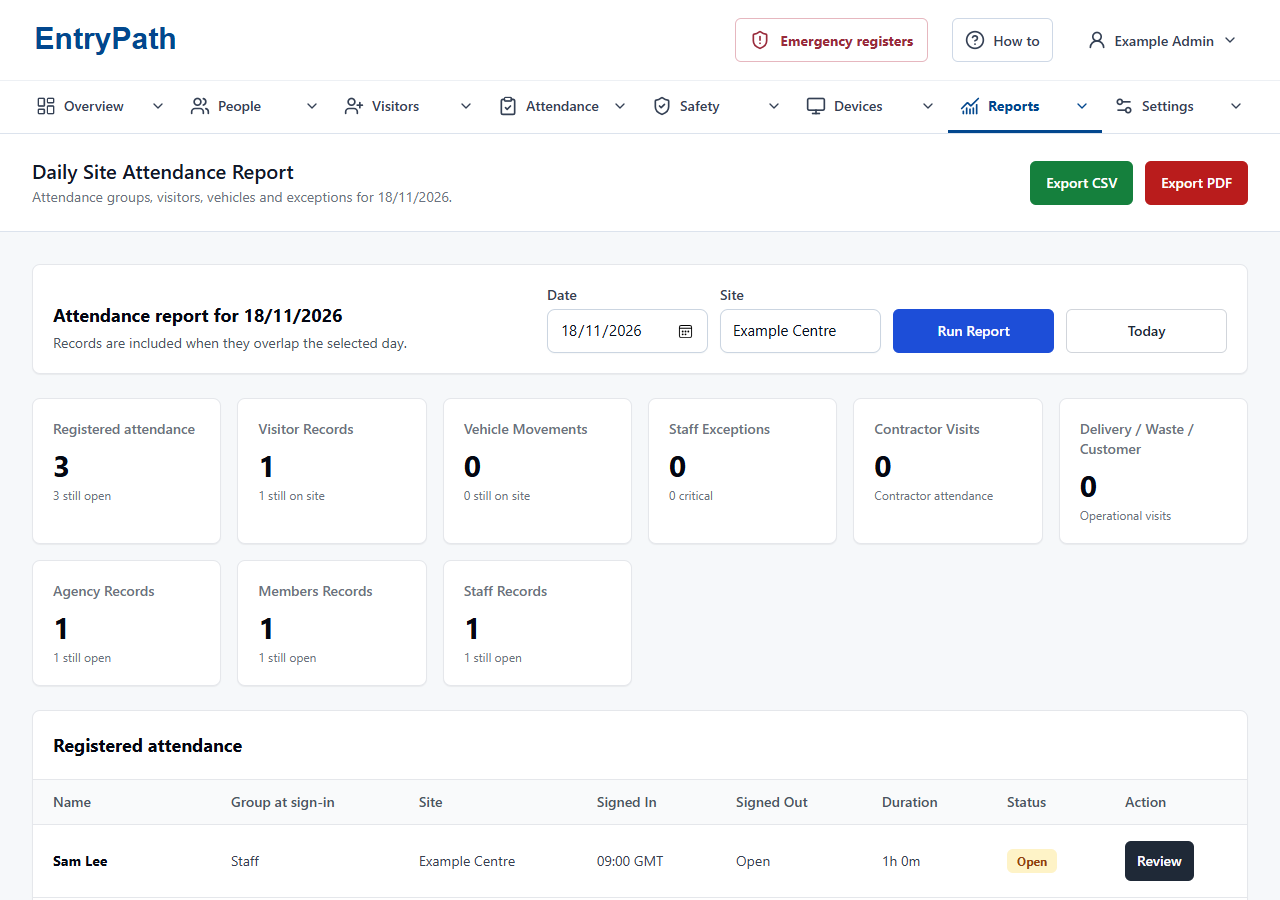
In a fictional practice drill, all expected people are eventually accounted for. However, one lead could not connect, a contractor was absent from the list and two people used the wrong assembly point. The final count alone would hide those useful lessons.
Ask what happened, what the team saw and what they had to do. Separate observations from assumptions. This article covers reviewing the attendance and roll-call workflow; the site's responsible team should lead the wider emergency debrief.
Review the right incident and sources
Confirm the site, date and incident before examining the register. Note whether the list used routine sign-ins, approved school attendance information or reviewed additions. Where a saved offline copy was used, record its capture time rather than describing it as live.
Keep the original event evidence intact. Do not change historic arrival times or confirmations merely to remove an awkward exception. Any authorised correction should have an understood reason and remain distinguishable from the original observation.
Ask four useful questions
People
Who was difficult to identify, missing from the list or at another point? Was the issue a record, a filter or uncertainty about identity?
Devices
Could authorised colleagues open the correct incident, read the screen and receive updates where they were standing?
Coordination
Who reviewed uncertainty and competing information? Was the independent fallback understood and available?
Handover
Could cover staff perform their role with the access and instructions they actually had?
Include reception and assembly-point leads in the discussion. A configuration that looks obvious to its administrator may not be clear to a colleague using it under pressure.
Turn observations into specific actions
A useful action identifies the issue, the owner, the next step and the evidence needed to close it. "Improve training" is too broad if the observed problem was finding a person hidden by an assembly-point filter.
Keep sensitive incident details in the authorised operational record, not in an unrestricted training document or public screenshot.
Retest the specific failure
Use fictional records for a focused software rehearsal. Try a missing name, a different assembly point or a lost connection, depending on what the drill revealed.
Check that the change helped without creating a different problem. Giving every colleague unrestricted access is not a proportionate answer to an unclear device handover. Revisit the role, approval and instructions first.
Carry the lesson into the next brief
Update the relevant handover, confirm deputies and close actions only when their evidence is available. Keep unresolved questions visible to the responsible team. A subsequent drill should test whether the improvement works in the normal setting.
EntryPath's emergency register supports the recording workflow; it does not certify emergency readiness. Use the site's approved plan and official evacuation guidance for the wider arrangements.
Keep exploring
A useful next read.
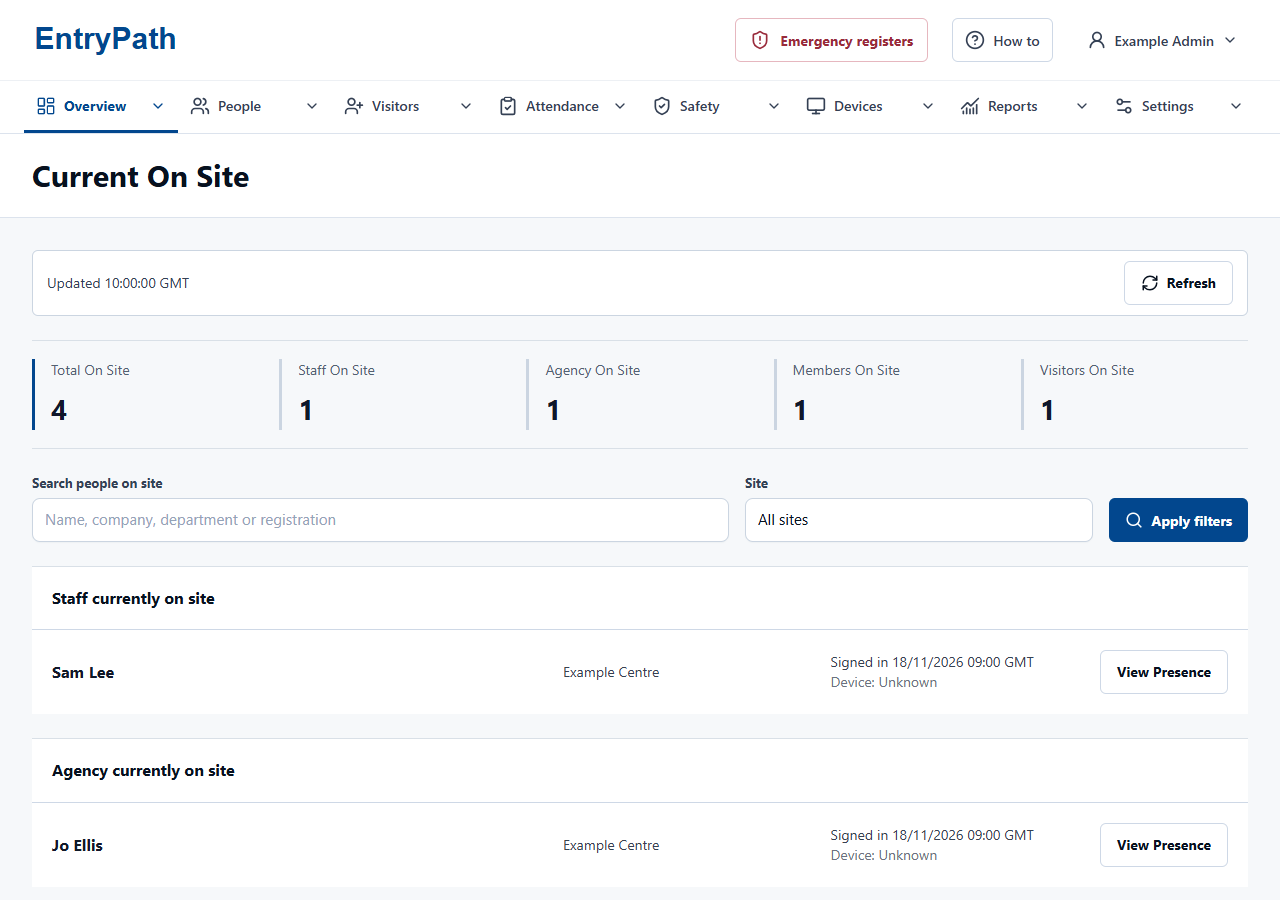
They are here. Their name is not.
Review identity, filters and duplicates before adding someone to an emergency register.
Read the guide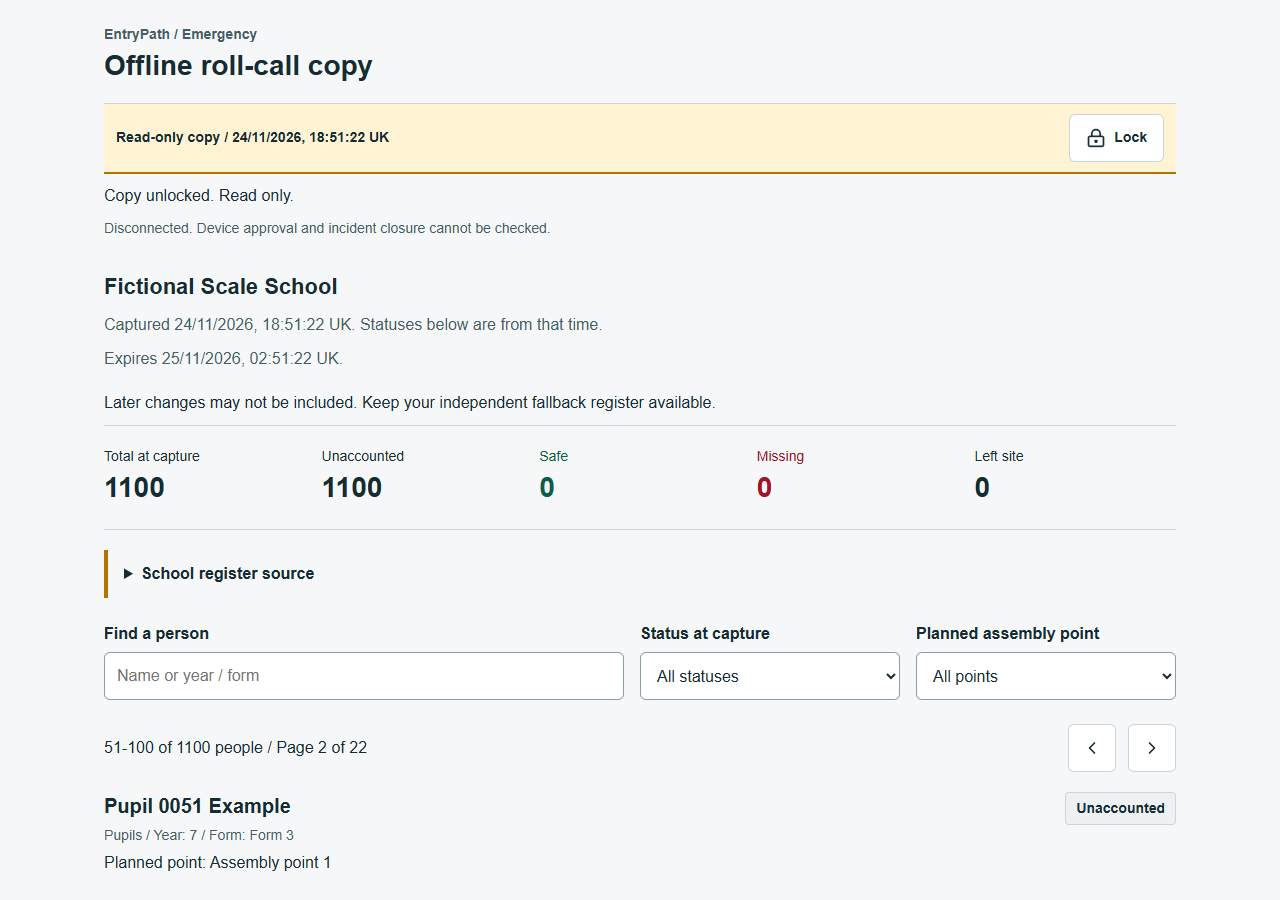
When the connection goes, what can you see?
Plan for live information, a protected saved copy and an independent fallback.
Read the guide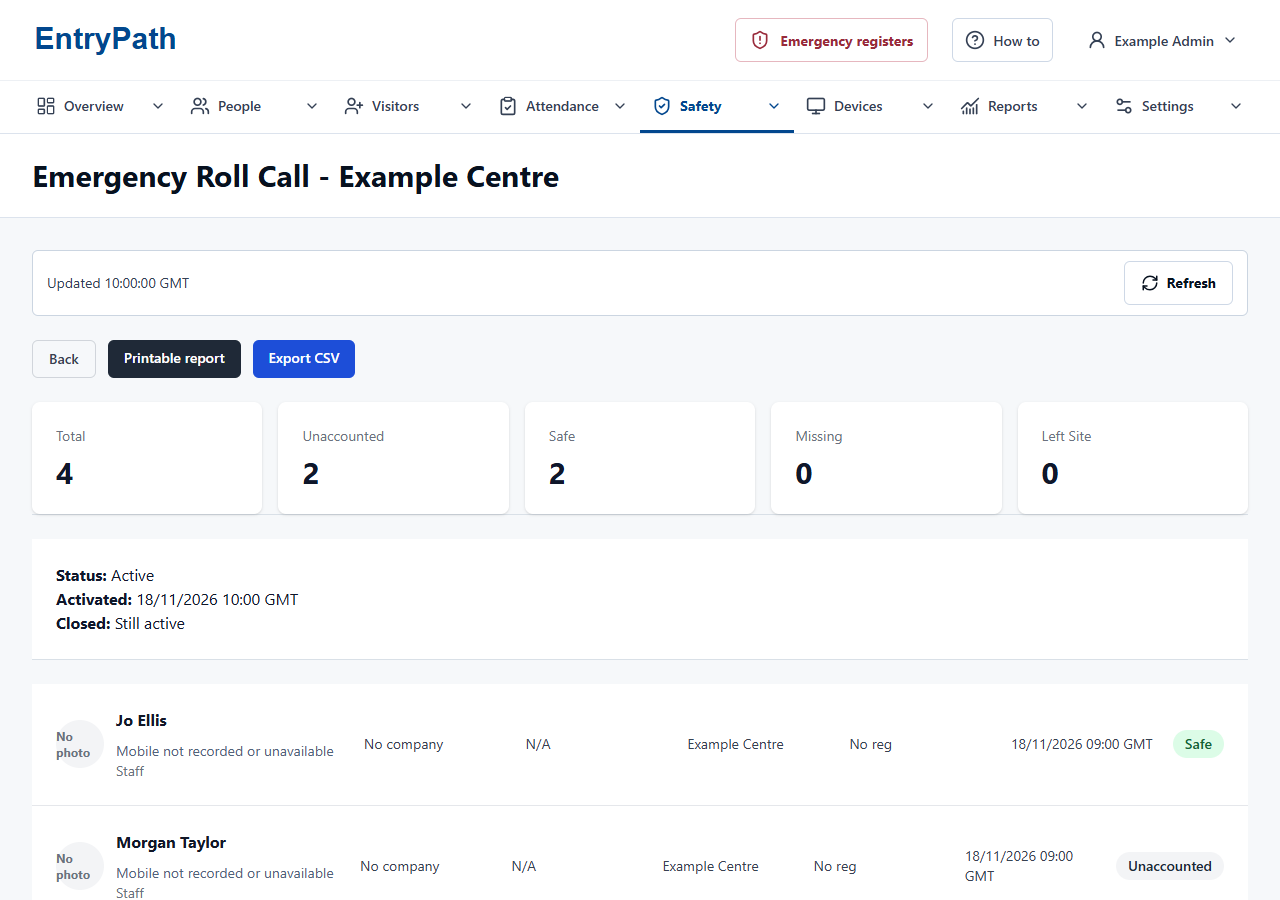
Emergency mustering: beyond a headcount
A practical register rehearsal for people, locations and connected decisions.
Read the guideMake the next rehearsal more useful.
Bring the register scenarios you want your team to test.