
Warehouses and logistics
Less back-and-forth.
A clearer gatehouse record.
Drivers, agency teams and contractors do not all arrive through the office. Plan sign-in around the working site, with clear responsibilities at every entrance.
Map the unnecessary trip first
A regular driver reaches a fictional depot, parks, walks to a kiosk, returns to the vehicle, unloads and repeats the walk to sign out. Before changing anything, establish which steps record attendance and which are required by the site's transport or unloading process.
Removing an unnecessary trip to a screen is different from removing a required conversation with the gatehouse. Keep the site's traffic management and operating instructions authoritative. HSE's workplace transport guidance discusses separating pedestrians and vehicles and communicating site routes.
Distinguish three kinds of arrival
Regular authorised driver
May be suitable for a shared truck tablet or personal-device sign-in, with the correct identity and site selected.
First-time delivery driver
May need a reception or gatehouse journey, directions and the appropriate site information before proceeding.
Contractor or agency worker
Needs the relevant group and responsible contact. Their arrival is not proof of permission to begin work.
EntryPath's industrial sign-in can support different arrival groups. Decide the questions each group needs rather than asking every person to complete a form intended for another role.
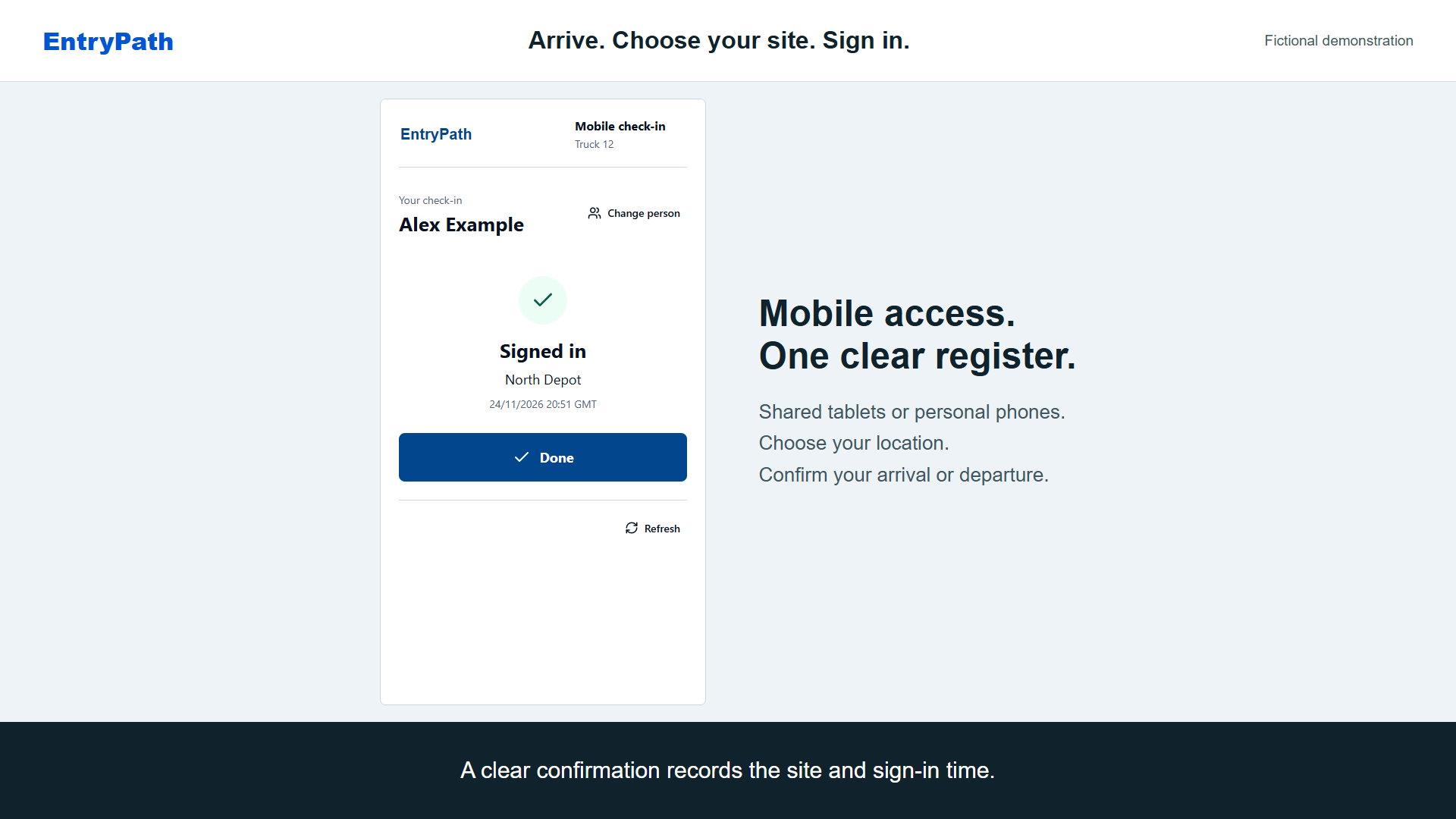
Make the shared-device handover explicit
A tablet belongs to the truck, but the attendance belongs to the person. At a handover, check the device is showing the correct person before recording an action. Include relief drivers and a different truck in the trial.
For authorised mobile users, the person selects the location and confirms sign-in or sign-out. Opening the page does not record an arrival. EntryPath does not use GPS to establish presence, and mobile sign-in needs an internet connection. Drivers should use the device only while safely parked.
Make departure part of the normal exit
Ask drivers where the sign-out instruction fits safely into their routine. Check what happens after an interrupted visit, a change of loading area or travel to another site. A completed delivery note does not automatically mean an attendance record has been closed.
Test the whole journey in the mobile driver guide. Give the gatehouse a way to review uncertainty without guessing that every old sign-in represents somebody still in the yard.
Include the yard in a register drill
For a planned drill, include an authorised driver, an outside contractor and a visiting employee. Check which records appear for the site and how the responsible team accounts for them under the emergency procedure.
Do not treat the vehicle, a booking or a signed-in device as proof that its usual driver is present or safe. Connection loss and incomplete attendance records still need an independent fallback. See the assembly-point guide for coordinating the software checks.
Measure the pilot at the gatehouse
A useful improvement reduces friction while keeping the required site conversations. Compare kiosk and mobile methods before deciding which groups should change.
Keep exploring
A useful next read.
Driver sign-in: tablets or personal phones?
Compare shared-device handovers and personal access for travelling teams.
Read the guide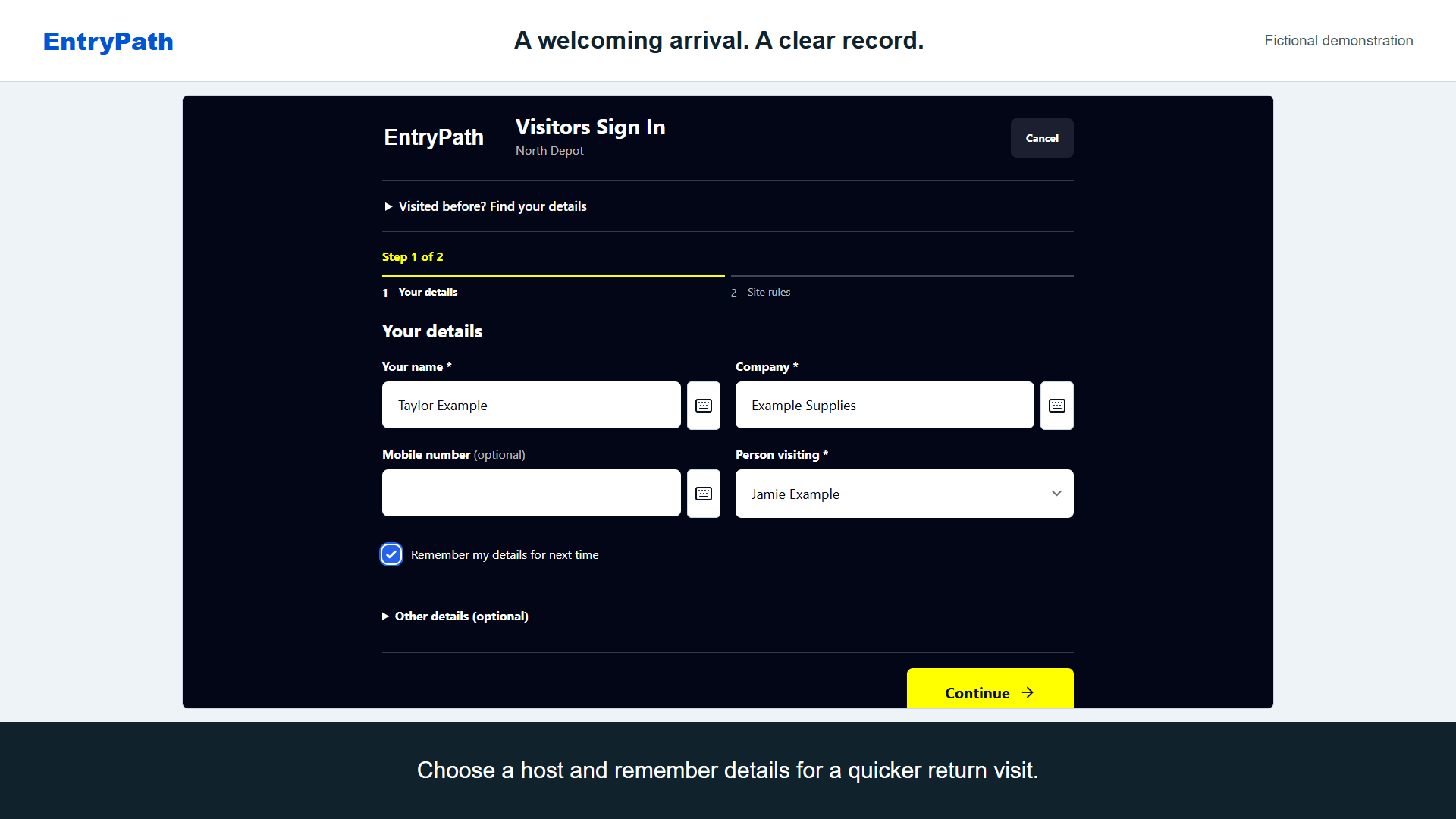
Contractor sign-in without the paper chase
Quicker repeat visits, current rules and a clearer departure record.
Read the guide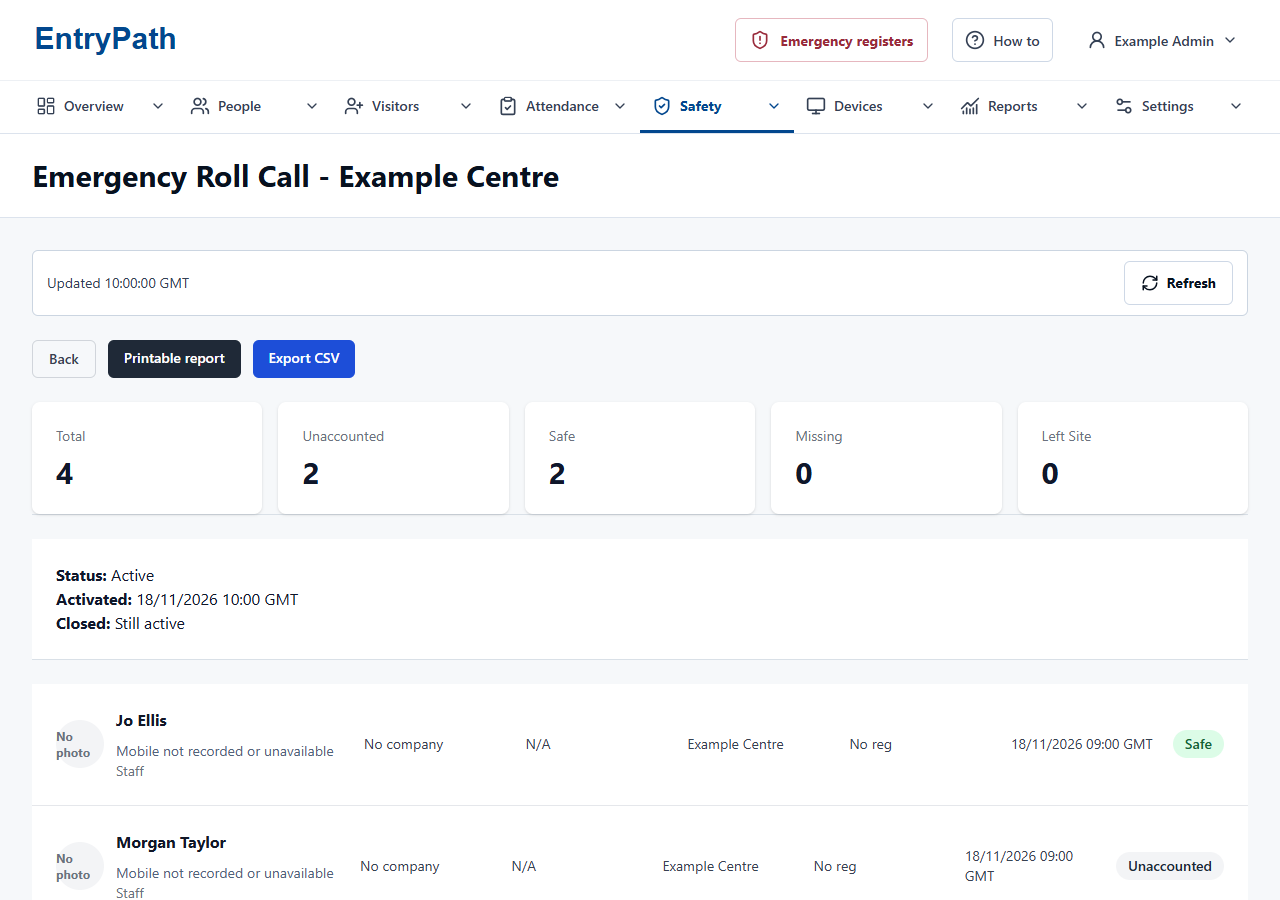
The right person. A different assembly point.
What to rehearse when somebody reaches a different point from the one planned.
Read the guideBring your gatehouse workflow.
Explore shared tablets, personal devices and the site register in one demonstration.